Friday, December 27, 2024

Communist Party of Peru: On Marxism-Leninism-Maoism


https://redlibrary.info/works/pcp/on-marxism-leninism-maoism


 Proletarians of all countries, unite!

Fundamental Documents
1. On Marxism-Leninism-Maoism

Communist Party of Peru

19881

In the furnace of class struggle, the ideology of the international proletariat emerged as Marxism, afterwards developed into Marxism-Leninism and later Marxism-Leninism-Maoism. Therefore, the scientific ideology of the proletariat, all-powerful because it is true, has three stages or landmarks in its dialectical process of development: 1) Marxism, 2) Leninism, and 3) Maoism. These three stages are part of the same unity which began with the Manifesto of the Communist Party one hundred and forty years ago, with the heroic epic of the class struggle, in fierce and fruitful two-line struggles within the communist parties themselves and in the titanic work of thought and action that only the working class could generate. Today, three unfading lights are outstanding: Marx, Lenin, and Mao Zedong who, through three grand leaps have armed us with the invincible ideology of Marxism-Leninism-Maoism, which today is principally Maoism.

Nevertheless, while Marxism-Leninism has obtained an acknowledgment of its universal validity, Maoism is not completely acknowledged as the third stage. Some simply deny its condition as such, while others only accept it as “Mao Zedong Thought.” In essence, both positions, with the obvious differences between them, deny the general development of Marxism made by Chairman Mao Zedong. The denial of the “-ism” character of Maoism denies its universal validity and, consequently, its condition as the third, new, and higher stage of the ideology of the international proletariat: Marxism-Leninism-Maoism, principally Maoism, that we uphold, defend, and apply.

As an introduction, in order to better understand Maoism and the necessity to struggle for it, let us remember Lenin. He taught us that as the revolution advanced to the East it expressed specific conditions that, while they did not negate principles or laws, were new situations that Marxism could not ignore, upon the risk of putting the revolution in danger of a defeat. Notwithstanding the uproar against what is new by pedantic and bookish intellectuals, who are stuffed with liberalism and false Marxism, the only just and correct thing to do is to apply Marxism to the concrete conditions and to solve the new situations and problems that every revolution necessarily faces. In the face of the horrified and pharisaic “defenses of the ideology, the class, and the people” that revisionists, opportunists and renegades proclaim, or the furious attacks against Marxism by brutalized academicians and hacks of the old order who are debased by the rotten bourgeois ideology and blindly defend the old society on which they are parasites. Lenin also said clearly that the revolution in the East would present new and great surprises to the greater amazement of the worshipers of following only the well-trodden roads who are incapable of seeing the new; and, as we all know, he trusted the Eastern comrades to resolve the problems that Marxism had not yet resolved.

Furthermore, we must keep well in mind that when Comrade Stalin justly and correctly stated that we had entered the stage of Leninism as the development of Marxism, there was also opposition by those who rend their garments in a supposed defense of Marxism. There were also those who said that Leninism was only applicable to the backward countries. But, in the midst of struggle, practice has consecrated Leninism as a great development of Marxism, and thus the proletarian ideology shone victoriously in the face of the world as Marxism-Leninism.

Today, Maoism faces similar situations. All new things, like Marxism, have always advanced through struggle, and similarly, Maoism will impose itself and be acknowledged.

As for the context in which Chairman Mao Zedong developed and Maoism was forged, on an international level it was on the basis of imperialism, world wars, the international proletarian movement, the national liberation movement, the struggle between Marxism and revisionism, and the restoration of capitalism in the USSR. Three big historical landmarks must be emphasized in the present century: first, the October revolution of 1917, which opened the era of the world proletarian revolution; second, the triumph of the Chinese revolution, in 1949, which changed the correlation of forces in favor of socialism; and third, the great proletarian cultural revolution, which initiated in 1966 as the continuation of the revolution under the proletarian dictatorship in order to maintain the revolutionary course towards communism. It is enough to emphasize that Chairman Mao led two of these glorious historical feats.

In China, as the center of world revolution, Maoism was concretely expressed within the most complex convergence of contradictions, and the intense and ruthless class struggle which was marked by the pretensions of the imperialist powers of tearing and dividing up China after the collapse of the Manchurian Empire (1911), the anti-imperialist movement of 1919, the revolts of the great peasant masses, the twenty-two years of armed struggle of the democratic revolution, the great contest for the building and development of socialism and the ten years of revolutionary storms for carrying forward the Cultural Revolution, as well as the sharpest two-line struggle within the Communist Party of China, especially against revisionism. All this was framed within the international situation described above. It is out of this aggregate of historical deeds that we have to extract four events of extraordinary importance: The founding of the Communist Party of China in 1921; the Autumn Harvest uprising which initiated the road from the countryside to the city, in 1927; the founding of the People’s Republic, 1949; and the Great Proletarian Cultural Revolution, from 1966-1976; in all of which Chairman Mao was a protagonist and the acknowledged leader of the Chinese revolution.

We can say from Chairman Mao Zedong’s biography that he was born on December 26th 1893, opening his eyes to an agitated world scorched by the flames of war; son of peasants, he was seven years old when the “Boxer Rebellions” began; a student at a Teachers” Training School, he was in his eighteenth year when the empire collapsed and he enlisted himself as a soldier, later to become a great organizer of peasants and of the youth in Hunan, his native province. Founder of the Communist Party and of the Red Army of workers and peasants, he established the road of encircling the cities from the countryside, developing people’s war as the military theory of the proletariat. He was the theoretician of New Democracy and founder of the People’s Republic; a promoter of the Great Leap Forward and of the development of socialism; the leader of the struggle against the contemporary revisionism of Khrushchev and his henchmen, leader and head of the Great Proletarian Cultural Revolution. These are landmarks of a life devoted thoroughly and solely to the revolution. The proletariat has seen three gigantic triumphs in this century: Two of them belong to Chairman Mao, and if one is glory enough, two are even more.

On the content of Maoism, of its substance, we must point out the following basic issues:

1. Theory. Marxism has three parts: Marxist philosophy, Marxist political economy, and scientific socialism. The development of all these three parts gives rise to a great qualitative leap of Marxism as a whole, as a unity on a higher level, which implies a new stage. Consequently, the essential thing is to show that Chairman Mao, as can be seen in theory and practice, has generated such a great qualitative leap. Let us highlight this with the following points:

In Marxist philosophy he developed the essence of dialectics, the law of contradiction, establishing it as the only fundamental law; and besides his profound dialectical understanding of the theory of knowledge, whose center are the two leaps that make up its law (from practice to knowledge and vice versa, but with knowledge to practice being the main one). We emphasize that he masterfully applied the law of contradiction in politics; and moreover he brought philosophy to the masses of people, fulfilling the task that Marx left.

In Marxist political economy, Chairman Mao applied dialectics to analyze the relationship between the base and superstructure, and, continuing the struggle of Marxism-Leninism against the revisionist thesis of the “productive forces,” he concluded that the superstructure, consciousness, can modify the base, and that with political power the productive forces can be developed. By developing the Leninist idea that politics is the concentrated expression of economics, he established that politics must be in command, (applicable on all levels) and that political work is the lifeline of economic work; which takes us to the true handling of political economy, not just a simple economic policy.

Despite its importance, an issue which is often sidestepped, especially by those who face democratic revolutions, is the Maoist thesis of bureaucrat-capitalism; that is, the capitalism which is being developed in the oppressed nations by imperialism along with different degrees of underlying feudalism, or even pre-feudal stages. This is a vital problem, mainly in Asia, Africa and Latin America, since a good revolutionary leadership derives from its understanding, especially when the confiscation of bureaucrat-capital forms the economic basis for carrying forward the socialist revolution as the second stage.

But the main thing is that Chairman Mao Zedong has developed the political economy of socialism. Of the utmost importance is his criticism of socialist construction in the Soviet Union, as well as his theses on how to develop socialism in China: Taking agriculture as the base and industry as the leading economic force, promoting industrialization guided by the relationship between heavy industry, light industry and agriculture; taking heavy industry as the center of economic construction and simultaneously paying full attention to light industry and agriculture. The Great Leap Forward and the conditions for its execution should be highlighted: One, the political line that gives it a just and correct course; two, small, medium, and large organizational forms in a greater to lesser quantity, respectively; three, a great drive, a gigantic effort of the masses of people in order to put it in motion and to take it through to success, a leap forward whose results are valued more for the new process set in motion and its historical perspective than its immediate achievements, and its linkage with agricultural collectivization and the people’s communes. Finally, we must bear well in mind his teachings on the objectivity and the subjectivity in understanding and handling the laws of socialism, that because the few decades of socialism have not permitted it to see its complete development, and therefore a better understanding of its laws and its specification, and principally the relationship that exists between revolution and the economic process, embodied in the slogan “grasp revolution and promote production.” Despite its transcendental importance, this development of Marxist political economy has received scant attention.

In scientific socialism, Chairman Mao further developed the theory of social classes analyzing them on economic, political, and ideological planes. He upheld revolutionary violence as a universal law without any exception whatsoever; revolution as a violent displacement of one class by another, thus establishing the great thesis that “power grows out of the barrel of a gun.” He resolved the question of the seizure of power in the oppressed nations through the road of encircling the cities from the countryside, establishing its general laws. He defined and developed the theory of the class struggle within socialism in which he brilliantly demonstrated that the antagonistic struggle between the proletariat and the bourgeoisie, between the socialist road and the capitalist road, and between socialism and capitalism continues. That in socialism it was not concretely determined who would defeat whom, that it was a problem whose solution demands time, the unfolding of a process of restoration and counter-restoration, in order for the proletariat to strongly hold power definitely through the proletarian dictatorship; and, finally and principally, the grandiose solution of historical transcendence, the Great Proletarian Cultural Revolution as the continuation of the socialist revolution under the proletarian dictatorship.

These basic questions, simply and plainly stated but known and undeniable, show the Chairman’s development of the integral parts of Marxism, and the evident raising of Marxism-Leninism to a new, third and higher stage: Marxism-Leninism-Maoism, principally Maoism.

Continuing with this brief synthesis, let us look at other specific points which, although deriving from the above, should be considered even if only in a numbered way, to emphasize and pay due attention to them.

2. New Democracy. Firstly, it is a development of the Marxist theory of the State, establishing three types of dictatorships: 1) of the bourgeoisie, in the old bourgeois democracies like the United States, a type in which the dictatorships of the oppressed nations such as the Latin American ones can be assimilated; 2) proletarian dictatorships, like the ones in the Soviet Union or in China before the usurpation of power by the revisionists; and 3) New Democracy, as a joint dictatorship based on the worker-peasant alliance, led by the proletariat headed up by the Communist Party, which was formed in China during its democratic revolution, and which is concretely expressed in Peru today through the People’s Committees, in the base areas and in the New-Democratic People’s Republic in formation. It is fundamental to emphasize, within this development of the theory of the state, the key differentiation between a state system as a dictatorship of a class or classes that hold power, which is principal, and a system of government, which is understood as an organization for the exercise of power.

On the other hand, New Democracy, one of the extraordinary developments made by Chairman Mao, masterfully materializes for us the bourgeois revolution of a new type, which only the proletariat can lead. In synthesis, it is the democratic revolution within the new era of world proletarian revolution in which we evolve. The new-democratic revolution implies a new economy, a new politics, and a new culture, obviously overthrowing the old order and upholding the new one with arms, the only way to transform the world.

Finally, it is important to emphasize that New Democracy is a democratic revolution. Although it mainly fulfills the democratic tasks, it also complementarily advances in some socialist tasks, so that the question of two stages, democratic and socialist, which corresponds to countries like ours, is thoroughly solved by guaranteeing that once the democratic stage is concluded, it will be continued as a socialist revolution, without any intermissions or interruptions.

3. The three instruments. The problem of the building of the instruments of the revolution presents the Party with the problem of understanding the interrelationship between the Party, the army and the united front; and to understand and correctly handle the interconnected building of the three instruments in the midst of war or in the defense of the new state based on the power of the armed people, expressing in that way a just and correct task of leadership. Their building is guided by the principle that a just and correct ideological line decides everything, and it is on this ideological-political basis that the organizational building is simultaneously developed in the midst of the struggle between the proletarian line and the bourgeois line and within the storm of the class struggle, mainly in war, as the principal form of current or potential struggle.

Regarding the Party, Chairman Mao starts from the necessity of the Communist Party, a new type of party, a party of the proletariat. Today, we would say a Marxist-Leninist-Maoist Party: a party whose aim is to seize power and to defend it, and therefore it is inextricably bound to people’s war in order to initiate it, develop it or wage it to defend itself. A party sustained by the masses of people, be it by way of people’s war which is a war of the masses, or by the united front which, being a front of classes, is based on the broad masses. The Party develops and changes itself according to the stages of the revolution and the periods that these stages may have. The driving of its development is the contradiction which materializes in its heart as the two-line struggle, the proletarian line and the bourgeois or in general non-proletarian line, which is in essence and mainly a struggle against revisionism. This leads to the decisive importance of ideology in the life of the Party and to the development of rectification campaigns that serve a greater adjustment of all the systems of party organizations and the membership to the just and correct ideological and political lines, guaranteeing the predominance of the proletarian line and keeping the Party leadership in its iron grip. The Party serves the establishment of power for the proletariat as the leading class of the New Democracy, and principally for the establishment, strengthening and development of the proletarian dictatorship, and through cultural revolutions the achievement of the great, final goal: communism. Because of this, the Party must lead everything in an all-encompassing way.

The revolutionary army is of a new type. It is an army for the fulfillment of the political tasks that the Party establishes in accordance with the interests of the proletariat and the people. This characteristic is concretely expressed in three tasks: To combat, to produce in order to pose no parasitical burden, and to mobilize the masses. It is an army based on the political development of the proletariat’s ideology, from Marxism-Leninism-Maoism (today), and from the general political line as well as the military one that the Party may establish. It is an army based on people and not on weapons, an army that surged from the masses with whom it has always been linked, serving them wholeheartedly, which allows it to move among the people like fish in the water. Without a people’s army the people have nothing, said Chairman Mao, at the same time he taught us the necessity of the Party’s absolute leadership over the army and his great principle: The Party commands the gun and we will never permit it to be otherwise. Besides having thoroughly established the principles and norms for the building of a new type of army, the Chairman himself called for preventing the use of the army for the restoration of capitalism by usurping the leadership through a counter-revolutionary coup d’état and, developing Lenin’s thesis on the people’s militia, he carried out farther than anyone the general policy of arming the people, thus opening a breach and pointing out the road towards the armed sea of masses that will lead us to the definite emancipation of the people and the proletariat.

It was Chairman Mao who for the first time developed a complete theory on the united front and established its laws. A front of social classes based on the worker-peasant alliance as a guarantee of the proletariat’s hegemony in the revolution, which is led by the proletariat represented by the Communist Party; in synthesis, a united front under the leadership of the Communist Party, a united front for the people’s war, for the revolution, for the seizure of power for the proletariat and the people. Therefore, in particular, the united front is the grouping of the revolutionary forces against the counter-revolutionary forces in order to wage the struggle between revolution and counter-revolution mainly through the armed people’s war. The united front, obviously, is not the same in every stage of the revolution and, furthermore, it has its specifications according to the various historical periods of each stage; likewise, the united front in a concrete revolution does not equal the one on a world level, although both follow the same general laws. Apart from this, it is important to emphasize the relation between the front and the State that Chairman Mao established when the war of resistance against Japan was evolving, setting forth that the united front is a form of joint dictatorship, a question that deserves to be especially studied by those who face democratic revolutions.

4. People’s war is the military theory of the international proletariat; in it are summarized, for the first time in a systematic and complete form, the theoretical and practical experience of the struggles, military actions, and wars waged by the proletariat, and the prolonged experience of the people’s armed struggle and especially of the incessant wars in China. It is with Chairman Mao that the proletariat attains its military theory; nevertheless, there is much confusion and misunderstanding on this issue. And much of it springs from how the people’s war in China is seen. Generally, it is considered derisively and contemptuously simply as a guerrilla war; this alone denotes a lack of understanding. Chairman Mao pointed out that guerrilla warfare achieves a strategic feature; but due to its essential fluidity, the development of guerrilla warfare is not understood as it exists, how it develops mobility, a war of movements, of positions, how it unfolds great plans of the strategic offensive and the seizure of small, mid-sized, and big cities, with millions of inhabitants, combining the attack from outside with the insurrection from within. Thus, in conclusion, the four periods of the Chinese revolution, and mainly from the agrarian war until the people’s war of liberation, considering the anti-Japanese war of resistance between both, shows the various aspects and complexities of the revolutionary war waged during more than twenty years amidst a huge population and an immense mobilization and participation of the masses. In that war there are examples of every kind; and what is principal has been extraordinarily studied and its principles, laws, strategy, tactics, rules, etc. masterfully established. It is, therefore, in this fabulous crucible and on what was established by Marxism-Leninism that Chairman Mao developed the military theory of the proletariat: people’s war.

We must fully bear in mind that subsequently, Chairman Mao himself, aware of the existence of atomic bombs and missiles and with China already having them, sustained and developed people’s war in order to wage it under the new conditions of atomic weapons and of war against powers and super-powers. In synthesis, people’s war is the weapon of the proletariat and of the people, even to confront atomic wars.

A key and decisive question is the understanding of the universal validity of people’s war and its subsequent application taking into account the different types of revolution and the specific conditions of each revolution. To clarify this key issue it is important to consider that no insurrection like that of Petrograd, the anti-fascist resistance, or the European guerrilla movements in the Second World War have been repeated, as well as considering the armed struggles that are presently being waged in Europe. In the final analysis, the October Revolution was not only an insurrection but a revolutionary war that lasted for several years. Consequently, in the imperialist countries the revolution can only be conceived as a revolutionary war which today is simply people’s war.

Finally, today more than ever, we Communists and revolutionaries, the proletariat and the people, need to forge ourselves in: “Yes, we are advocates of the omnipotence of revolutionary war; that is good, not bad, it is Marxist.”;2 which means adhering to the invincibility of people’s war.

5. The Great Proletarian Cultural Revolution in a historical perspective is the most transcendental development of Marxism-Leninism made by Chairman Mao; it is the solution to the great pending problem of the continuation of the revolution under the proletarian dictatorship: “constitutes a new stage in the development of the socialist revolution in our country, a deeper and more extensive stage.”

What was the situation that presented itself? As stated in the Decision of the Central Committee of the Chinese Communist Party Concerning the Great Proletarian Cultural Revolution: “Although the bourgeoisie has been overthrown, it is still trying to use the old ideas, culture, customs and habits of the exploiting classes to corrupt the masses, capture their minds and endeavor to stage a comeback. The proletariat must do the exact opposite: it must meet head-on every challenge of the bourgeoisie in the ideological field and use the new ideas, culture, customs and habits of the proletariat to change the mental outlook of the whole of society. At present, our objective is to struggle against and overthrow those persons in authority who are taking the capitalist road, to criticize and repudiate the reactionary bourgeois academic ‘authorities” and the ideology of the bourgeoisie and all other exploiting classes and to transform education, literature and art and all other parts of the superstructure not in correspondence with the socialist economic base, so as to facilitate the consolidation and development of the socialist system.”

It was in these conditions that the most Earth-shaking political process and the greatest mass mobilization the world has ever seen broke out, and whose objectives were thus outlined by Chairman Mao: “The current Great Proletarian Cultural Revolution is absolutely necessary and most timely for consolidating the dictatorship of the proletariat, preventing capitalist restoration and building socialism.”3

We also emphasize two questions: 1) The GPCR implies a landmark in the development of the proletarian dictatorship towards the proletariat’s securing power, concretely expressed in the Revolutionary Committees; and 2) The restoration of capitalism in China after the 1976 counter-revolutionary coup is not a negation of the GPCR but is plainly part of the contention between restoration and counter-restoration, and, on the contrary, it shows us the transcendental historical importance of the GPCR in the inexorable march of mankind towards communism.

6. World revolution. Chairman Mao emphasizes the importance of the world revolution as a unity, on the basis that revolution is the main trend while the decomposition of imperialism is greater each day, and the role played by the masses grows more immense each year, masses that make and shall make their transforming and unstoppable strength be felt, and reiterates the great truth: Either we all reach communism or nobody does. Within this specific perspective in the era of imperialism, the great historical moment of the “next 50 to 100 years,” and within this context the opening period of struggle against Yankee imperialism and Soviet social-imperialism, paper tigers that contend for hegemony and threaten the world with an atomic war, in the face of which, firstly we must condemn it, and secondly, we must prepare ourselves beforehand in order to oppose it with people’s war and make the revolution. On the other hand, starting from the historical importance of the oppressed nations and, furthermore, from their perspective both in the economic and political relationships that are evolving on account of the process of decomposition of imperialism, Chairman Mao stated his thesis of the “differentiation of the three worlds.” All of which leads to the necessity of developing the strategy and tactics of world revolution. Regrettably, we know little or almost nothing about Chairman Mao’s writings and statements on these transcendental questions; nevertheless, the very little that is known shows the grand perspectives which he watched closely and the great outlines that we must follow in order to understand and serve the proletarian world revolution

7. Superstructure, ideology, culture, and education. These and other related issues have been subtly and deeply studied by Chairman Mao. For that reason, this is also another basic question that deserves attention.

In conclusion, the contents seen in these fundamental issues show clearly to whoever wants to see and understand that we have, therefore, a new, third, and higher stage of Marxism: Maoism; and that to be a Marxist in these days demands to be a Marxist-Leninist-Maoist and principally Maoist.

All that has been explained in the contents leads us to two questions:

What is fundamental in Maoism? Power is fundamental in Maoism. Power for the proletariat, power for the dictatorship of the proletariat, power based on an armed force led by the Communist Party. More explicitly: 1) Power under the leadership of the proletariat in the democratic revolution; 2) Power for the dictatorship of the proletariat in the socialist and cultural revolutions; 3) Power based on an armed force led by the Communist Party, seized and defended through people’s war.

And, what is Maoism? Maoism is the elevation of Marxism-Leninism to a new, third, and higher stage in the struggle for proletarian leadership of the democratic revolution, the development of the construction of socialism and the continuation of the revolution under the proletarian dictatorship as a proletarian cultural revolution; when imperialism deepens its decomposition and revolution has become the main tendency of history, amidst the most complex and largest wars seen to date and the implacable struggle against contemporary revisionism.

On the struggle around maoism. Briefly, the struggle in China for establishing Mao Zedong Thought began in 1935 at the Zunyi Conference, when Chairman Mao assumed the leadership of the Communist Party of China. In 1945 the Seventh Congress agreed that the CPC was guided by Marxism-Leninism and the ideas of Mao Zedong, a specification suppressed by the Eighth Congress, since a rightist line prevailed in it. The Ninth Congress in 1969 resumed the GPCR and ratified that the CPC is guided by Marxism-Leninism-Mao Zedong Thought; that was as far as it advanced.

On an international level, it acquired influence from the 1950s onwards; but it is with the GPCR that it intensely spread out and its prestige rose powerfully and Chairman Mao was acknowledged as the leader of the world revolution and originator of a new stage in Marxism-Leninism; thus, a great number of Communist Parties assumed the denomination of Marxism-Leninism-Mao Zedong Thought. On the world level, Maoism confronted contemporary revisionism openly unmasking it profoundly and forcefully, and likewise it did so in the CPC’s own ranks, all of which raised the Chairman’s great red banner still more: The new, third, and higher stage of the ideology of the international proletariat. At present, Maoism confronts the triple attack of Soviet, Chinese, and Albanian revisionism. But today, even among those who acknowledge the Chairman’s great contributions, including the development of Marxism, there are some who believe that we are still in the stage of Marxism-Leninism, and others who only accept Mao Zedong Thought but by no means Maoism.

In this country, obviously, the revisionists who follow the baton of their diverse masters, Gorbachev, Deng, Alia, or Castro have continuously attacked Maoism; among them one must condemn, unmask, and implacably combat Del Prado’s callous revisionism and his gang, the so called “Peruvian Communist Party”;4 the abject deviousness of the self-proclaimed “Communist Party of Peru, Red Homeland”5 who, after raising themselves up as “great Maoists” became Deng’s servants, after having condemned him when he was defenestrated in 1976, as well as the anti-Maoism of the so called “United Left,”6 in whose heart swarmed all the revisionist and even anti-Marxist positions passed off by false Marxists and opportunists of many kinds. We must raise Maoism as a revealing mirror for revisionists in order to combat them implacably, working for the development of the people’s war and the triumph of the democratic revolution underway, which is an unavoidable and irrevocable task of a strategic character.

The Communist Party of Peru, through the faction led by Chairman Gonzalo, who propelled its reconstitution, took up Marxism-Leninism-Mao Zedong Thought in 1966; in 1979 the slogan “Uphold, defend, and apply Marxism-Leninism-Mao Zedong Thought!”; in 1981: “Towards Maoism!”; and, in 1982, took Maoism as an integral part and higher development of the ideology of the international proletariat: Marxism-Leninism-Maoism. It is with the people’s war that we have understood more deeply what Maoism implies and we have taken up the solemn pledge to “Uphold, defend, and apply Marxism-Leninism-Maoism, principally Maoism!” and to work relentlessly in helping to place it as leader and guide of the world revolution, the always red and unfading banner that is the guarantee of triumph for the proletariat, the oppressed nations, and peoples of the world in their inexorable, combative march of iron legions towards the golden and always brilliant goal of communism.


  1. https://vnd-peru.blogspot.com/2024/12/pcp-sobre-el-marxismo-leninismo-maoismo.html↩︎

  2. RedLibrary: This quote is from Chairman Mao Zedong, Problems of War and Strategy, November 6, 1938.↩︎

  3. RedLibrary: As quoted in the work Lin Biao, Report to the Ninth National Congress of the Communist Party of China, April 1969.↩︎

  4. RedLibrary: In Spanish: “Partido Comunista Peruano.”↩︎

  5. RedLibrary: In Spanish: “Partido Comunista del Perú, Patria Roja.”↩︎

  6. RedLibrary: In Spanish: “Izquierda Unida.”↩︎

Monday, December 23, 2024

PCP: SOBRE EL MARXISMO-LENINISMO-MAOISMO


Proletarios de todos los países, uníos!


DOCUMENTOS FUNDAMENTALES


I. SOBRE EL MARXISMO-LENINISMO-MAOISMO.


La ideología del proletariado internacional, en el crisol de la lucha de clases, insurgió como marxismo deviniendo marxismo-leninismo y, posteriormente, marxismo-leninismo-maoísmo. Así, la todopoderosa ideología científica del proletariado, todopoderosa porque es verdadera, tiene tres etapas: 1) marxismo, 2) leninismo, 3) maoísmo; tres etapas, momentos o hitos de su proceso dialéctico de desarrollo; de una misma unidad que en ciento cuarenta años, a partir del "Manifiesto", en la más heroica epopeya de la lucha de clases, en encarnizadas y fructíferas luchas de dos líneas en los propios partidos comunistas y la inmensa labor de titanes del pensamiento y la acción que solamente la clase podía generar, sobresaliendo tres luminarias inmarcesibles: Marx, Lenin, Mao Tse-tung, mediante grandes saltos y tres grandiosos nos ha armado con el invencible marxismo-leninismo-maoísmo, principalmente maoísmo de hoy.


Sin embargo, mientras el marxismo-leninismo logró reconocimiento de su validez universal, el maoísmo no es reconocido plenamente como tercera etapa; pues, mientras unos niegan simplemente su condición de tal, otros sólo llegan a su aceptación como "pensamiento Mao Tsetung". Y, en esencia, en ambos casos, con las obvias diferencias que entre sí tienen, niegan el desarrollo general del marxismo hecho por el Presidente Mao Tsetung; no reconocerle su carácter de "ismo", de maoísmo, es negarle vigencia universal y, en consecuencia, su condición de tercera, nueva y superior etapa de la ideología del proletariado internacional: el marxismo-leninismo-maoísmo, principalmente maoísmo que enarbolamos, defendemos y aplicamos.


Como INTRODUCCION para mejor comprender el maoísmo y la necesidad de luchar por él, recordemos a Lenin. Nos enseñó que conforme la revolución se adentraba al Este expresaba condiciones específicas que, si bien no negaban principios o leyes, eran nuevas situaciones que el marxismo no podía ignorar so pena de exponer la revolución al fracaso. Y que pese a la grita que particularmente la intelectualidad atiborrada de liberalismo y falsamente marxista, pedante y libresca, levantara en contra de lo nuevo, lo único justo y correcto es aplicar el marxismo a la realidad concreta y resolver las nuevas situaciones y problemas que toda revolución necesariamente enfrenta y resuelve; ante el espanto y farisaicas "defensas de la ideología, de la clase y del pueblo" que proclaman revisionistas, oportunistas y renegados, o los furibundos y ciegos ataques de embrutecidos académicos y plumíferos del viejo orden, envilecidos de podrida ideología burguesa, dispuestos a defender la vieja sociedad que parasitan. Más aún, expresamente Lenin dijo que la revolución en Oriente depararía nuevas y grandes sorpresas para mayor asombro de los adoradores de seguir sólo los caminos conocidos e incapaces de ver lo nuevo; y, como todos sabemos, encomendó a los camaradas orientales resolver problemas que aún el marxismo no había resuelto.


Además, tener muy presente que cuando el camarada Stalin justa y correctamente planteó que habíamos entrado a la etapa del leninismo como desarrollo del marxismo, también hubo oposición y quienes rasgaron sus vestiduras en supuesta defensa del marxismo; tener muy presente que, también del leninismo hubo quienes dijeron que solamente era aplicable a los países atrasados; pero en medio de lucha la práctica lo consagró como gran desarrollo del marxismo y la ideología del proletariado brilló victoriosa ante el mundo como marxismo-leninismo.


Hoy, el maoísmo enfrenta situaciones similares; y como siempre lo nuevo y el marxismo se han abierto paso a través de la lucha, el maoísmo así también se impondrá y será reconocido.


En cuanto al CONTEXTO en que se desenvolvió el Presidente Mao Tsetung y se forjó el maoísmo, internacionalmente sobre la base del imperialismo, guerras mundiales, movimiento proletario internacional, movimiento de liberación nacional, lucha entre marxismo y revisionismo y restauración del capitalismo en la URSS, tres grandes hitos históricos cabe destacar en el presente siglo: primero, la revolución de Octubre, 1917, que abre la era de la revolución proletaria mundial; segundo, triunfo de la revolución china, 1949, cambiando la correlación de fuerzas a favor del socialismo; y tercero, gran revolución cultural proletaria, iniciada el 66, como continuación de la revolución bajo la dictadura del proletariado para mantener el rumbo hacia el comunismo. Baste resaltar que el Presidente Mao dirigió dos de estos gloriosos hechos históricos.


Y en China, donde como centro de la revolución mundial se concretó el maoísmo, dentro de la más compleja convergencia de contradicciones, intensa y cruenta lucha de clases signada por las pretensiones de las potencias imperialistas de despedazar y repartirse China, el derrumbe del imperio manchú (1911), el movimiento antiimperialista del 19, las rebeliones del inmenso campesinado, los veintidós años de lucha armada de la revolución democrática, la gran contienda por la construcción y desarrollo del socialismo y los diez años de tormenta revolucionaria por llevar adelante la revolución cultural, en medio de la más aguda lucha de dos líneas en el P.C.Ch especialmente contra el revisionismo, y todo enmarcado en el panorama internacional descrito. Es de este conjunto de hechos históricos que debemos extraer cuatro de extraordinaria importancia: la fundación del Partido Comunista de China en 1921; el Levantamiento de la Cosecha de Otoño iniciando el camino del campo a la ciudad, en 1927; la fundación de la República Popular, 1949; y la Gran Revolución Cultural Proletaria, 1966-76; en todos los cuales el Presidente Mao fue protagonista y principalmente el más alto dirigente como jefe reconocido de la revolución china.


Así de la biografía del Presidente Mao Tsetung podemos decir que, nacido el 26 de diciembre de 1893, abrió los ojos en un mundo agitado por las llamas de la guerra; hijo de campesinos tenía siete años cuando la "Guerra de los boxers"; estudiante para maestro estaba por los dieciocho cuando se derrumbó el imperio, se alistó como soldado para después ser gran organizador de campesinos y jóvenes, en Junán su tierra natal. Fundador del Partido Comunista y del Ejército Rojo de obreros y campesinos; estableció el camino de cercar las ciudades desde el campo, desarrolló la guerra popular y con ella la teoría militar del proletariado; teórico de la Nueva Democracia fundó la República Popular; gestor del Gran Salto Adelante e impulsor del desarrollo del socialismo; guía de la lucha contra el revisionismo contemporáneo de Jruschov y sus secuaces, jefe y mando de la Gran Revolución Cultural Proletaria. Estos son hitos que jalonan una vida dedicada cabal y plenamente a la revolución. Tres gigantescos triunfos tiene el proletariado en este siglo; dos corresponden al Presidente Mao y si uno es suficiente gloria, dos lo son más.


Sobre el CONTENIDO del maoísmo, obviamente lo sustancial del mismo, debemos apuntar a las cuestiones básicas siguientes:


1. Teoría. El marxismo tiene tres partes: filosofía marxista, economía política marxista y socialismo científico; el desarrollo en todas ellas que genere un gran salto cualitativo del marxismo en su conjunto, como unidad a un nivel superior implica una nueva etapa. En consecuencia, lo esencial es mostrar que el Presidente Mao ha generado, como puede verse en la teoría y en la práctica, tal gran salto cualitativo. Por necesidad expositiva veamos ésto en el presente y siguientes puntos.


En la filosofía marxista desarrolló lo medular de la dialéctica, la ley de la contradicción estableciéndola como única ley fundamental; y aparte de su profunda comprensión dialéctica de la teoría del conocimiento, cuyo centro son los dos saltos que conforman su ley, (de la práctica al conocimiento y de éste a aquélla, siendo principal el del conocimiento a la práctica), resaltar que aplicó magistralmente la ley de la contradicción a la política; y más aún llevó la filosofía a las masas cumpliendo la tarea que Marx dejara.


En economía política marxista. El presidente Mao aplicó la dialéctica para analizar la relación base-superestructura y prosiguiendo la lucha del marxismo-leninismo contra la tesis revisionista de las "fuerzas productivas", concluyó que la superestructura, la conciencia pueden modificar la base y con el poder político desarrollar las fuerzas productivas. Y desarrollando la idea leninista de la política como expresión concentrada de la economía, estableció la política es el mando, (aplicable en todos los planos) y el trabajo político es la línea vital del trabajo económico; lo cual lleva a un verdadero manejo de la economía política y no a una simple política económica.


Una cuestión que se soslaya, no obstante su importancia, especialmente para quienes enfrentan revoluciones democráticas, es la tesis maoísta del capitalismo burocrático; esto es, el capitalismo que se desenvuelve en las naciones oprimidas por el imperialismo y con diverso grado de feudalidad subyacente u otras anteriores incluso. Este es un problema vital principalmente para Asia, Africa y América Latina, pues, de su comprensión deriva una buena conducción revolucionaria, máxime si de la confiscación del mismo depende, económicamente, la base para llevar adelante la revolución socialista como segunda etapa.


Pero, lo principal es que el Presidente Mao Tsetung ha desarrollado la economía política del socialismo. Es de suma importancia su crítica a la construcción socialista en la URSS; asimismo sus tesis sobre cómo desenvolver el socialismo en China: tomar la agricultura como base y la industria como dirigente; la industrialización guiándose por la relación entre la industria pesada, la ligera y la agricultura, tomando como centro de la construcción económica a la industria pesada y simultáneamente prestar plena atención a la industria ligera como a la agricultura. Cabe destacar el Gran Salto Adelante y las condiciones para su ejecución: uno, línea política que le dé justo y correcto rumbo; dos, formas orgánicas pequeñas, medianas y grandes de mayor a menor cantidad respectivamente; tres, un gran impulso, un gigantesco esfuerzo de las masas para ponerlo en marcha y llevarlo al éxito; salto adelante cuyos resultados se aprecian más por el proceso puesto en movimiento y su perspectiva histórica que por sus logros inmediatos; y su ligazón con la cooperativización agrícola y la comuna popular. Finalmente, tener muy en cuenta sus enseñanzas sobre la objetividad y subjetividad en la comprensión y manejo de las leyes del socialismo; que las pocas décadas de socialismo no han permitido ver su pleno desarrollo y por tanto el mejor conocimiento de sus leyes y su especificación; y principalmente la relación entre revolución y proceso económico, concretada en "empeñarse en la revolución y promover la producción". Sin embargo, pese a su trascendental importancia poco se trata este desarrollo de la economía política marxista.


En el socialismo científico el Presidente Mao desarrolló la teoría de las clases analizándolas en los planos económico, político e ideológico; la violencia revolucionaria como ley universal sin excepción alguna; la revolución como sustitución violenta de una clase por otra, estableció su gran tesis "El Poder nace del fusil" y resolvió la cuestión de la conquista del Poder en las naciones oprimidas a través del camino de cercar las ciudades desde el campo, estatuyendo sus leyes generales. Definió brillantemente desarrollándola la teoría de la lucha de clases en el socialismo, que en él prosigue la lucha antagónica entre proletariado y burguesía, entre camino socialista y capitalista y entre socialismo y capitalismo; que concretamente no estaba definido quién vencería a quién, problema cuya solución demandaría tiempo, el desenvolvimiento del proceso de restauración y contrarrestauración para que el proletariado se afincara definitivamente en el Poder mediante la dictadura del proletariado; y final y principalmente la grandiosa solución de trascendencia histórica de la Gran Revolución Cultural Proletaria como continuación de la revolución socialista bajo la dictadura del proletariado.


Estas cuestiones básicas, casi simplemente enunciadas pero conocidas e innegables, muestran el desarrollo del Presidente de las partes integrantes del marxismo y la evidente elevación del marxismo-leninismo a una nueva, tercera y superior etapa: el marxismo-leninismo-maoísmo, principalmente maoísmo.


Prosiguiendo esta visión sintética, veamos otros puntos específicos que si bien derivan de lo anterior deben considerarse, aunque sea enumerativamente, para por lo menos destacarlos llamando la atención sobre ellos.


2. La Nueva Democracia. Primeramente es un desarrollo de la teoría marxista del Estado el establecimiento de los tres tipos de dictadura: 1) de la burguesía, en las viejas democracias burguesas como Estados Unidos, tipo al cual es asimilable la dictadura existente en las naciones oprimidas como las latinoamericanas; 2) la dictadura del proletariado como en la Unión Soviética o China antes de la usurpación del Poder por los revisionistas; y 3) la Nueva Democracia como dictadura conjunta basada en la alianza obrero-campesina dirigida por el proletariado encabezado por el Partido Comunista, lo que en China se plasmara a lo largo de su revolución democrática y en el Perú se concreta hoy en comités populares, bases de apoyo y República Popular de Nueva Democracia en organización. Es fundamental resaltar, dentro de este desarrollo de la teoría del Estado, la diferenciación clave entre sistema de Estado como dictadura de la clase o clases que ejercen el Poder, que es lo principal, y sistema de gobierno entendida como organización para el ejercicio del Poder.


Por otro lado, la Nueva Democracia, uno de los extraordinarios desarrollos del Presidente Mao, nos concreta magistralmente la revolución burguesa de nuevo tipo la que sólo puede dirigir el proletariado, en síntesis la revolución democrática dentro de la nueva era de la revolución proletaria mundial en que nos desenvolvemos. Revolución de Nueva Democracia que implica nueva economía, nueva política y nueva cultura, obviamente derrumbando el viejo orden y levantando lo nuevo con fusiles, única forma de transformar el mundo.


Finalmente, es importante resaltar que la Nueva Democracia, como revolución democrática si bien cumple, principalmente, las tareas democráticas también, complementariamente, avanza en algunas tareas socialistas; de esta forma se resuelve a fondo la cuestión de las dos etapas, democrática y socialista, que corresponden a países como el nuestro garantizándose, concluída la democrática, la prosecución como revolución socialista sin intermedio alguno, ininterrumpidamente.


3. Los tres instrumentos. El problema de la construcción de los instrumentos de la revolución plantea al Partido la comprensión de la interrelación del Partido, el ejército y el frente único; y, comprender y manejar la construcción interrelacionada de los tres en medio de la guerra o en el mantenimiento del nuevo Estado basado en el poderío del pueblo armado expresa una justa y correcta labor de dirección. La construcción se guía por principio de la justa y correcta línea ideológica lo decide todo, y es sobre esta base ideológico-política que simultáneamente se desarrolla la construcción organizativa, en medio de la lucha entre la línea proletaria y la burguesa y en la tempestad de la lucha de clases, principalmente de la guerra, como forma principal de lucha ya sea actuante o potencial.


En cuanto al Partido, el Presidente Mao parte de la necesidad del Partido Comunista, de un partido de nuevo tipo, un partido del proletariado, hoy diríamos un partido marxista-leninista-maoísta; un partido cuyo objetivo es conquistar el Poder y defenderlo, por lo cual está indesligablemente ligado a la guerra popular, ya sea para iniciarla, desarrollarla o librarla para defenderse; un partido sustentando en las masas ya sea por la propia guerra popular que es guerra de masas o del frente único que siendo frente de clases se basa en las masas mayoritarias. El Partido se desarrolla y cambia según las etapas de la revolución y los períodos que aquellas tengan; y el motor de su desarrollo es la contradicción concretada en su seno como lucha de dos líneas, entre línea proletaria y línea burguesa o no proletaria en general, en esencia y principalmente una lucha contra el revisionismo. Esto lleva a la importancia decisiva de la ideología en la vida partidaria y al desarrollo de campañas de rectificación que sirvan al mayor ajuste de todo el sistema de organizaciones partidarias y la militancia a las líneas ideológicas y políticas justas y correctas, en función del predominio de la línea proletaria y el mantenimiento de la dirección partidaria en sus férreas manos. El Partido sirve al establecimiento del Poder del proletariado, ya sea como clase dirigente de la Nueva Democracia y principalmente a la instauración de la dictadura del proletariado, su fortalecimiento y desarrollo para mediante revoluciones culturales conquistar la gran meta final, el comunismo; por eso el Partido tiene que llegar a dirigir todo omnímodamente.


El ejército revolucionario es de nuevo tipo, esto es un ejército para el cumplimiento de las tareas políticas que el Partido establece en función de los intereses del proletariado y del pueblo; carácter que se concreta en tres tareas: combatir, producir para no ser carga parasitaria y movilizar a las masas. Es un ejército que se basa en la construcción política a partir de la ideología del proletariado, del marxismo-leninismo-maoísmo (hoy), y la línea política general cuanto militar que el Partido establezca. Es un ejército que se basa en los hombres y no en las armas; un ejército surgido de las masas y siempre ligado a ellas a quienes sirve de todo corazón, permitiéndole moverse en su seno como el pez en el agua. Sin un ejército popular nada tendrá el pueblo, dice el Presidente Mao a la vez que nos enseña la necesidad de la dirección absoluta del Partido sobre el ejército y sienta su gran principio: El Partido manda al fusil y jamás permitiremos lo contrario. Además de establecer cabalmente los principios y normas de la construcción de un ejército de nuevo tipo, el mismo Presidente llamó a conjurar el uso del ejército para la restauración capitalista usurpando la dirección mediante un golpe contrarrevolucionario, y desarrollando tesis de Lenin sobre la milicia popular llevó más adelante que nadie el armamento general del pueblo, abriendo trocha y señalando el camino hacia el mar armado de masas que nos guiará a la -emancipación definitiva del pueblo y del proletariado.


Es el Presidente Mao Tsetung quien por vez primera desarrolla una teoría completa sobre el frente único y establece sus leyes. Un frente basado en la alianza obrero-campesina como garantía de la hegemonía del proletariado en la revolución; un frente de clases dirigido por el proletariado representado por el Partido; en síntesis un frente único bajo dirección del Partido Comunista; un frente único para la guerra popular, para la revolución, para la conquista del Poder en beneficio del proletariado y el pueblo. Así, en concreto, el frente único es la agrupación de las fuerzas revolucionarias contra las fuerzas contrarrevolucionarias para librar la lucha entre revolución y contrarrevolución principalmente mediante la guerra popular, armadamente. El frente único, como es evidente, no es igual en cada etapa de la revolución y, más aún, tiene sus especificaciones según los diversos períodos de cada etapa; asimismo el frente único en una revolución concreta no es igual que a nivel mundial, aunque ambos sigan las mismas leyes generales. Aparte de esto, es importante resaltar la relación entre frente y Estado que el Presidente Mao establece planteando que el frente único es una forma de dictadura conjunta, cuando se desenvolvía la guerra antijaponesa, cuestión que merece estudiarse especialmente por quienes afrontamos revoluciones democráticas.


4. La guerra popular es la teoría militar del proletariado internacional; en ella se resume, por vez primera en forma sistemática y completa, la experiencia teórica y práctica de las luchas, acciones militares y guerras libradas por el proletariado y la larga experiencia de la lucha armada popular y especialmente de las guerras campesinas de China. Es con el Presidente Mao que la clase logra tener su teoría militar; sin embargo, hay bastante confusión e incomprensión sobre este problema. Y la misma comienza por cómo se ve la guerra popular en China, generalmente se la considera, reducida y despectivamente como una simple guerra de guerrillas; ésto ya denota no comprender que con el Presidente Mao la guerra de guerrillas adquiere carácter estratégico; pero además, no se comprende el desarrollo de la guerra de guerrillas como desde su fluidez esencial desarrolla movilidad, guerra de movimientos, guerra de posiciones, desenvuelve grandes planes de ofensiva estratégica y conquista de ciudades pequeñas, medianas y grandes, de millones de habitantes, combinando el ataque desde fuera con la insurrección desde dentro. Así, en conclusión los cuatro períodos de la revolución china y principalmente desde la guerra agraria a la guerra de liberación popular, considerando entre ambas la guerra antijaponesa, muestran las diversas facetas y complejidades de la guerra revolucionaria librada durante más de veinte años, en una gigantesca población y una inmensa movilización y participación de las masas; en esa guerra hay ejemplos de todo tipo; y lo que es principal ha sido extraordinariamente estudiada y magistralmente establecidos sus principios, leyes, estrategia, táctica, normas, etc. Es, pues, en ese fabuloso crisol y sobre lo establecido por el marximo-leninismo que el Presidente Mao estableció la teoría militar del proletariado, la guerra popular.


Debemos tener muy presente que, posteriormente, el propio Presidente, con conocimiento de la existencia de bombas atómicas y cohetes y poseyéndolos, sostuvo y desarrolló la guerra popular para librarla en las nuevas condiciones de armas atómicas y guerra con potencias y superpotencias; en síntensis la guerra popular es el arma del proletariado y el pueblo incluso para enfrentarse a guerras atómicas.


Una cuestión clave y decisiva es la compresión de la validez universal de la guerra popular y su consecuente aplicación, teniendo en cuenta los diferentes tipos de revolución y las condiciones específicas de cada revolución. Servirá a esta cuestión clave considerar que no se ha repetido una insurrección como la de Petrogrado, la resistencia antifascista y las guerrillas europeas en la II Guerra Mundial, así como las luchas armadas que se libran en Europa actualmente; y ver que al fin y al cabo, la Revolución de Octubre no fue sólo insurrección sino una guerra revolucionaria que duró varios años. En consecuencia, en los países imperialistas la revolución sólo puede concebirse como guerra revolucionaria y ésta hoy es simplemente guerra popular.


Finalmente, hoy más que nunca los comunistas y los revolucionarios, el proletariado y el pueblo, necesitamos forjarnos en: "Sí, somos partidarios de la teoría de la omnipotencia de la guerra revolucionaria; eso no es malo; es bueno, es marxista"; lo que significa ser partidarios de la invencibilidad de la guerra popular.


5. La Gran Revolución Cultural Proletaria en perspectiva histórica es lo más trascendental del desarrollo del marxismo-leninismo por el Presidente Mao; es la solución del gran problema pendiente de la continuación de la revolución bajo la dictadura del proletariado; "representa una nueva etapa, aún más profunda y más amplia, en el desarrollo de la revolución socialista de nuestro país".


Qué situación se presentó? Como dice la Decisión del P.C.Ch. sobre la GRCP: "Aunque derrocada, la burguesía todavía trata de valerse de las viejas ideas, cultura, hábitos y costumbres de las clases explotadoras para corromper a las masas y conquistar la mente del pueblo en su esfuerzo por restaurar su Poder. El proletariado debe hacer exactamente lo contrario: debe propinar golpes despiadados y frontales a todos los desafíos de la burguesía en el dominio ideológico y cambiar la fisonomía espiritual de toda la sociedad utilizando sus propias nuevas ideas, cultura, hábitos y costumbres. Nuestro objetivo actual es aplastar, mediante la lucha, a los que ocupan puestos dirigentes y siguen el camino capitalista, criticar y repudiar a las "autoridades" reaccionarias burguesas en el campo académico, criticar y repudiar la ideología de la burguesía y demás clases explotadoras, y transformar la educación, la literatura y el arte y los demás dominios de la superestructura que no corresponden a la base económica del socialismo, a fin de facilitar la consolidación y el desarrollo del sistema socialista".


En estas condiciones se produjo el más estremecedor proceso político y la mayor movilización de masas que ha visto la Tierra, cuyos objetivos los definió así el Presidente Mao: "La Presente Gran Revolución Cultural Proletaria es completamente necesaria y muy oportuna para consolidar la dictadura del proletariado, prevenir la restauración del capitalismo y construir el socialismo".


Destaquemos además dos cuestiones: 1) que la GRCP implica un hito en el desarrollo de la dictadura del proletariado hacia el afianzamiento del proletariado en el Poder, que se concretó en los Comités Revolucionarios; y 2) la restauración del capitalismo en China, después del golpe contrarrevolucionario del 76, no es la negación de la GRCP sino llanamente parte de la contienda entre restauración-contrarrestauración y, por el contrario, nos muestra la trascendental importancia histórica que tiene la GRCP en la inexorable marcha de la humanidad al comunismo.


6. Revolución mundial. El Presidente Mao acentúa nuevamente la importancia de la revolución mundial como unidad, partiendo de que la revolución es la tendencia principal en tanto la descomposición del imperialismo es mayor cada día, el papel de las masas más inmensas año a año que hacen y harán sentir su fuerza transformadora incontenible y en la gran verdad, por él reiterada de: todos entramos al comunismo o no entra nadie. Dentro de esta perspectiva específica en la época del imperialismo el gran momento histórico de los "próximos 50 a 100 años", y en su contexto el período que se abre de lucha contra el imperialismo yanqui y el socialimperialismo soviético, tigres de papel que se disputan la hegemonía y amenazan al mundo con una guerra atómica frente a la cual, primero hay que condenarla y luego prepararse anticipadamente para oponerle la guerra popular y hacer la revolución. Por otro lado, a partir de la importancia histórica de las naciones oprimidas y más aún de su perspectiva, así como de las relaciones económicas y políticas que están desenvolviéndose por el proceso de descomposición del imperialismo, el Presidente planteó su tesis de "tres mundos se delinean". Todo lo cual lleva a la necesidad de desarrollar la estrategia y la táctica de la revolución mundial. Lamentablemente poco o casi nada conocemos de los escritos y planteamientos del Presidente Mao sobre estas trascendentales cuestiones; sin embargo, lo muy poco conocido muestra las grandiosas perspectivas que avizoraba y los grandes lineamientos que debemos seguir para comprender y servir a la revolución proletaria mundial.


7. Superestructura, ideología, cultura, educación. Estos problemas y otros concernientes han sido sutil y profundamente estudiados y resueltos por el Presidente; por tanto, es también ésta otra cuestión básica que merece atención.


Concluyendo, el contenido visto en estas cuestiones básicas muestran, a quien quiere ver y entender, en forma palmaria que tenemos, pues, una tercera, nueva y superior etapa del marxismo: el maoísmo; y que ser marxista en la actualidad demanda ser marxista-leninista-maoísta y principalmente maoísta.


Lo expuesto en el contenido nos lleva a dos interrogantes:


Qué es lo fundamental del maoísmo? Lo fundamental del maoísmo es el Poder. El Poder para el proletariado, el Poder para la dictadura del proletariado, el Poder basado en una fuerza armada dirigida por el Partido Comunista. Más explícitamente: 1) El Poder bajo dirección del proletariado, en la revolución democrática; 2) el Poder para la dictadura del proletariado, en las revoluciones socialista y culturales; 3) el Poder basado en una fuerza armada dirigida por el Partido Comunista, conquistado y defendido mediante la guerra popular.


Y qué es el maoísmo? El maoísmo es la elevación del marxismo-leninismo a una tercera, nueva y superior etapa en la lucha por la dirección proletaria de la revolución democrática, el desarrollo de la construcción del socialismo y la continuación de la revolución bajo la dictadura del proletariado, como revolución cultural proletaria; cuando el imperialismo profundiza su descomposición y la revolución ha devenido la tendencia principal de la historia, en medio de las más complejas y grandes guerras vistas hasta hoy y la lucha implacable contra el revisionismo contemporáneo.


Sobre la LUCHA EN TORNO AL MAOISMO. Escuetamente, en China la lucha por establecer el pensamiento Mao Tsetung comienza en 1935, en la Reunión de Tsunyi, cuando el Presidente Mao asume la dirección del Partido Comunista de China; el 45, el VII Congreso acordó que el PCCh se guiaba por el marxismo-leninismo y las ideas Mao Tsetung, especificación suprimida por el VIII, pues, en él primó una línea derechista. El IX Congreso del 69, resume la GRCP y sanciona que el P.C.Ch. se guía por el marxismo-leninismo-pensamiento Mao Tsetung; hasta ahí se avanzó.


A nivel internacional adquiere influencia a partir de la década del 50; pero es con la GRCP que se difunde intensamente y su prestigio se eleva poderosamente y el Presidente Mao pasa a ser reconocido jefe de la revolución mundial y generador de una nueva etapa del marxismo-leninismo; así gran número de Partidos Comunistas asumen la denominación marxismo-leninismo-pensamiento Mao Tsetung. A nivel mundial el maoísmo se enfrentó abierta y encarnizadamente con el revisionismo contemporáneo desenmascarándolo profunda y contundentemente, igualmente lo hizo en las propias filas del PCCh, lo cual elevó más aún la gran bandera roja del Presidente: la tercera, nueva y superior etapa de la ideología del proletariado internacional. En la actualidad el maoísmo afronta el triple ataque del revisionismo soviético, chino y albanés. Pero, además, hay incluso quienes reconocen grandes aportes del Presidente y hasta su desarrollo del marxismo, unos consideran que seguimos en la etapa del marxismo-leninismo y otros que solamente aceptan pensamiento Mao Tsetung pero en modo alguno maoísmo.


En el país, obviamente los revisionistas que siguen el bastón de mando de sus diferentes amos Gorbachov, Teng, Alía o Castro atacaron y siguen atacando furiosamente al maoísmo; entre éstos hay que condenar, desenmascarar y combatir implacablemente al encallecido revisionismo de Del Prado y su pandilla del llamado "Partido Comunista Peruano"; las sinuosidades rastreras del autodenominado "Partido Comunista del Perú, Patria Roja" que de autoerigirse en "grandes maoístas" pasaron a siervos de Teng, luego de haberlo condenado cuando su defenestración del 76; así como el antimaoísmo de la denominada "Izquierda Unida" en cuyo seno pululan todos los revisionistas y hasta posiciones antimarxistas pasando por los falsos marxistas y oportunistas de diversa laya. Enarbolar el maoísmo como espejo revelador de revisionistas para combatirlos implacablemente en función del desarrollo de la guerra popular y el triunfo de la revolución democrática en marcha, es insoslayable e inabdicable tarea de carácter estratégico.


El Partido Comunista del Perú, a través de la fracción dirigida por el Presidente Gonzalo que impulsó la reconstitución, asumió el marxismo-leninismo-pensamiento Mao Tsetung el año 1966; el 79 la consigna de Enarbolar, defender y aplicar el marxismo-leninismo-pensamiento Mao Tsetung!; el 81: Hacia el maoísmo!; y, el 82 el maoísmo como parte integrante y desarrollo superior de la ideología del proletariado internacional: el marxismo-leninismo-maoísmo. Es con la guerra popular que hemos comprendido más profundamente lo que implica el maoísmo y asumido el solemne compromiso de Enarbolar, defender y aplicar el marxismo-leninismo-maoísmo, principalmente maoísmo!; y, bregar incansablemente por coadyuvar a ponerlo como mando y guía de la revolución mundial, única rojísima e inmarcesible bandera que es garantía de triunfo para el proletariado, las naciones oprimidas y los pueblos del mundo en su inexorable marcha combatiente, de legiones de hierro hacia el dorado y por siempre resplandeciente comunismo.


1988

PARTIDO COMUNISTA DEL PERÚ


Friday, December 20, 2024

INDIA:Rise in Rage against Cowardly War Crimes of the Indian State! Remove Indian Army from Maad! Resist Operation Kagar! (RSF)

 viernes, 20 de diciembre de 2024

INDIA:Rise in Rage against Cowardly War Crimes of the Indian State! Remove Indian Army from Maad! Resist Operation Kagar! (RSF)


7 revolutionaries of the CPI(Maoist) were assassinated in cold blood by the murderous Greyhound forces on 1st December 2024 in Telengana. According to sources, on 30th November, these seven revolutionaries came to a village in the Chalchaka Panchayat and asked the villagers to organize a meal for them. An informer, who was residing in the village, poisoned the meal which made them lose consciousness - after which they were captured, brutally tortured and shot at point blank range at 4'o clock in the morning. The bodies of the revolutionaries have grievous wounds on their backs, missing and broken teeths and many other injuries which clearly indicate torture. Surprisingly, the body of Egolapu Mallaiah, one of the martyrs, didn't even have bullet wounds as revealed by his wife after the body was handed over to her by the Telengana High Court in response to her petition along with other civil rights organisations alleging fake encounter. This clearly indicates that the revolutionaries were murdered in cold blood, instead of being shot down in an encounter as alleged by the police.

Considering that the resistance put by the revolutionary masses may be categorised as an Internal Armed Conflict, the use of the Indian army in Abujhmaad also falls under "disproportionate" use of military forces. Otherwise, the Indian government must accept that the territory controlled by the revolutionary masses under the leadership of the Maoist communists is to such a great extent that it needs the deployment of the Army to wrest control. However, then Amit Shah's claims of defeating Maoism by 2026 will easily be deflated.

Since the beginning of 2024, we have seen that the politically bankrupt Indian state and its various forces unable to combat revolutionary politics has resorted to genocidal and cowardly attacks on the people and revolutionaries, starting with the murder of a six month old child in January to this. The International Humanitarian Law prohibits the use of poison, torture and execution of "Prisoners-of-war". The Indian Army, the Greyhounds, the Anti-Naxal Force, CRPF and all other military-paramilitary forces are all war-criminal mercenary groups with their hands stained with the blood of the Indian people.

The Indian state has mounted an all-out offensive against its own people in the interests of Foreign Finance Capital and its Indian representatives. Whether that be Operation Kagar or Operation Handshake, the only interests that these anti-people drives serve is that of the Adanis and Ambanis of this nation. Along with these direct operations, the state has launched various covert campaigns to stir up communal tensions and divide the revolutionary masses. We call upon all democratic, progressive and revolutionary people of the country and the world to build up militant mass movements against such fascist onslaughts on the people in the interests of the foreign imperialists, the comprador bureaucratic capitalists, and the feudal landlords

Wednesday, December 18, 2024

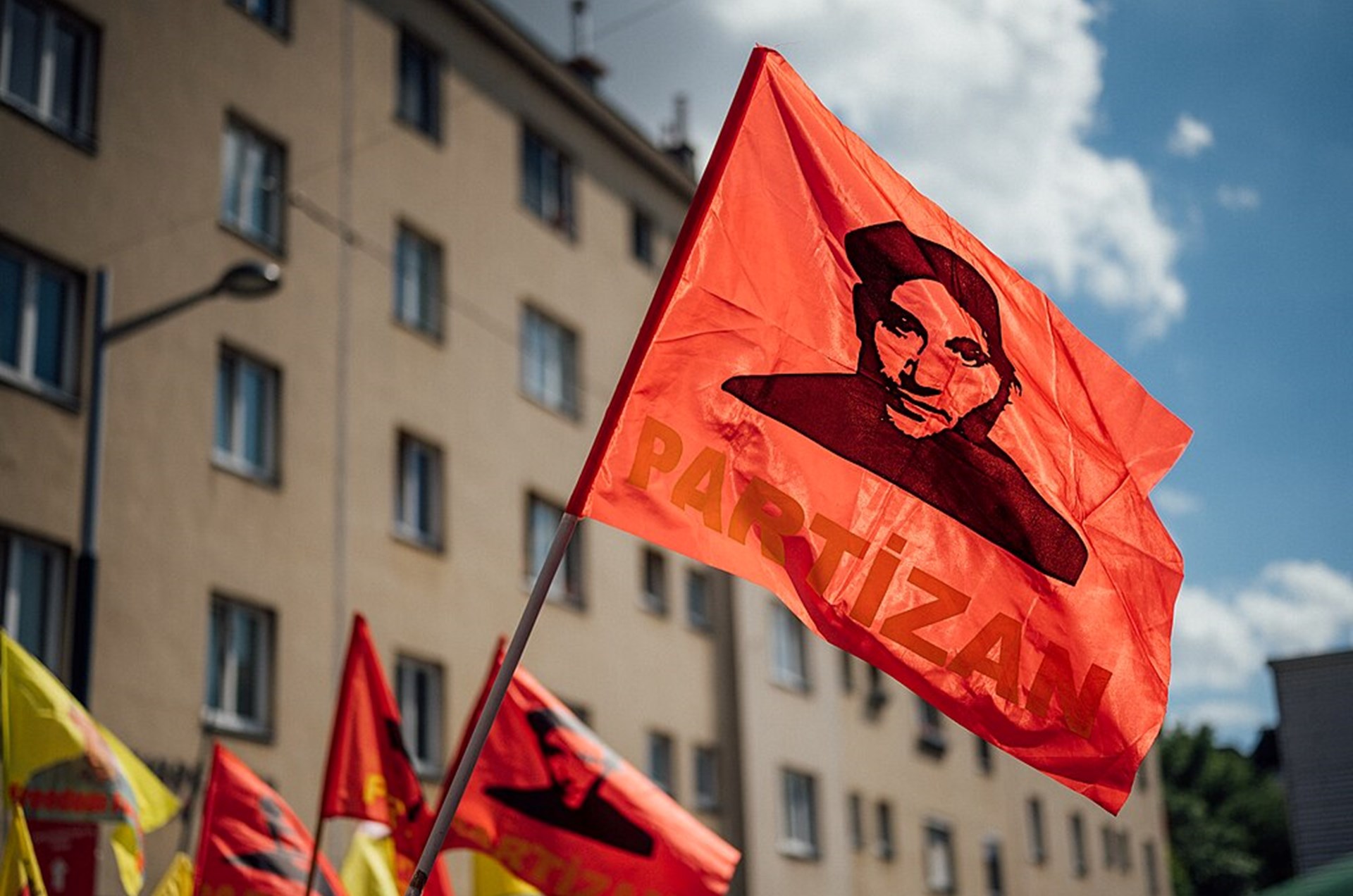
Die griechische Polizei hat türkische Revolutionäre festgenommen.- La policía griega arrestó a revolucionarios turcos

Yeni Demokrasi berichtet: Am Mittag des 11. Dezember führte die griechische Polizei in Athen eine Razzia in einem Geschäft durch, in dem Partizan-Leser arbeiteten. In einer gemeinsamen Erklärung gegen den Angriff sagten die KKE (ml) und Partizan: „Wir werden weiterhin die Ängste der reaktionären Klassen schüren.“ Die griechische Polizei wies dies mit der Aussage „Es gibt keine Festnahme“ zurück.


Yeni Demokrasi informa: Al mediodía del 11 de diciembre, la policía griega en Atenas allanó una tienda donde trabajaban los lectores del Partizan. En una declaración conjunta contra el ataque, el KKE (ml) y el Partizan dijeron: "Seguiremos avivando los temores de las clases reaccionarias". La policía griega lo rechazó diciendo: "No hay ningún arresto".


Mit dieser Razzia, die ohne behördliche Entscheidung, Begründung oder staatsanwaltschaftliche Aufsicht erfolgte, führte die Polizei eine unbefugte Durchsuchung der Räumlichkeiten durch. Unterdessen wurde ein Partizan-Leser, der Mitarbeiter des Unternehmens war, verbal und körperlich angegriffen. Gleichzeitig ging die Polizei zu anderen Unternehmen in der Gegend und gab an, es handele sich um eine „Anti-Terror“-Einheit, nannte jedoch keinen Grund für die Durchsuchungen und Razzien. Während der Durchsuchung wurden zwei Personen festgenommen, ein Grieche und ein Türke, die als Kunden vor Ort waren, sowie einen weiteren türkischen Einwanderer und Partizan-Leser, der die Razzia beobachtete und an die Vorderseite des Geschäfts kam. Es waren weder Telefonanrufe noch der Kontakt zu einem Anwalt erlaubt. Bei der Durchsuchung des Geschäfts wurden zwei zum Ort gehörende Kameras zerbrochen und beschlagnahmt, außerdem wurde eine gesetzeswidrige Durchsuchung des Geschäfts durchgeführt.

Die Polizei reagierte nicht auf Auskunftsersuchen der Anwälte während des Festnahmeverfahrens. So sehr, dass die Polizei trotz wiederholter Durchsuchungen bestritt, überhaupt eine solche Festnahme und Razzia durchgeführt zu haben. Während dieses Vorgangs konnten keine Informationen darüber eingeholt werden, wohin die festgenommenen Personen gebracht wurden, Auf der Polizeiwache kam es weiterhin zu rechtswidrigen Angriffen. Dem inhaftierten Partizan-Leser wurde eine Durchsuchung gegen die Menschenwürde auferlegt, und als er sich weigerte, wurden ihm Handschellen auf dem Rücken angelegt und er wurde gefoltert. Darüber hinaus wurden allen Inhaftierten ohne rechtliche Grundlage gewaltsam DNA-Proben und Fingerabdrücke abgenommen. Nach stundenlanger Haft wurden diejenigen, die von der Polizei ohne Begründung für die Razzia und ohne Benachrichtigung ihrer Anwälte festgenommen wurden, freigelassen, ohne dass ein offizielles Ermittlungsverfahren eingeleitet wurde.

Während dieser Razzia durch die griechische Polizei wurde in den Medien die Nachricht veröffentlicht, dass in Athen und Thessaloniki eine „große Operation gegen die türkische Mafia“ durchgeführt wurde. Es scheint, dass die griechische Polizei versucht, mit einem willkürlichen Angriff eine Provokation zu erzeugen, indem sie gleichzeitig mit dieser Operation türkische Revolutionäre ins Visier nimmt.

Diese Informationen über die Razzia wurden in die gemeinsame Erklärung der KKE (ml) und Partizan aufgenommen. Die Erklärung endete mit den folgenden Worten: „Die griechische Polizei, die sich die in der Öffentlichkeit weit verbreiteten Aktivitäten türkischer Banden zunutze macht, nutzt diese Gelegenheit, indem sie die revolutionären Kommunisten angreift.“ Doch trotz aller Angriffe werden wir unsere Pflicht nicht aufgeben, den gemeinsamen Kampf des Volkes gegen die reaktionären herrschenden Klassen Griechenlands und der Türkei auszuweiten. Wir werden weiterhin solidarisch mit dem Befreiungskampf des griechischen Volkes gegen die Unterdrückung und Angriffe des griechischen Staates sein und ihn unterstützen. Wir wissen sehr gut, dass dieser Druck und diese Angriffe durch die Klassenfeindschaft des reaktionären Systems gegenüber Revolutionären und Kommunisten genährt werden, und wir werden die Ängste der reaktionären Klassen weiter verstärken.“


TRADUCCIÓN:


 Con este allanamiento, que se llevó a cabo sin decisión oficial, justificación ni supervisión fiscal, la policía llevó a cabo un registro no autorizado del local. Mientras tanto, un lector del Partizan que era empleado de la empresa fue agredido verbal y físicamente. Al mismo tiempo, la policía acudió a otros negocios de la zona y dijo que eran una unidad “antiterrorista”, pero no explicó los motivos de los registros y redadas. Durante el registro fueron arrestadas dos personas, un griego y un turco que estaban allí como clientes, así como otro inmigrante turco y lector del Partizán que observó la redada y se acercó al frente de la tienda. No se permitieron llamadas telefónicas ni contacto con un abogado. Durante el registro de la tienda se rompieron y confiscaron dos cámaras pertenecientes al lugar, y también se llevó a cabo un registro ilegal de la tienda.

La policía no respondió a las solicitudes de información de los abogados durante el proceso de arresto. Tanto es así que, a pesar de las repetidas búsquedas, la policía negó haber llevado a cabo tal arresto y redada. Durante este proceso no se pudo obtener información sobre el lugar al que llevaban a los detenidos. En la comisaría continuaron los ataques ilegales. El lector del Partizán detenido fue sometido a un registro contra la dignidad humana y, cuando se negó, lo esposaron a la espalda y lo torturaron. Además, se tomaron por la fuerza muestras de ADN y huellas dactilares a todos los detenidos sin ningún fundamento legal. Tras horas de detención, las personas detenidas por la policía sin justificación para la redada y sin informar a sus abogados fueron puestas en libertad sin que se iniciara ninguna investigación formal.

Durante esta redada de la policía griega, se publicó en los medios de comunicación la noticia de que se estaba llevando a cabo una “gran operación contra la mafia turca” en Atenas y Salónica. Parece que la policía griega está intentando crear una provocación con un ataque indiscriminado atacando a los revolucionarios turcos al mismo tiempo que esta operación.

Esta información sobre la redada se incluyó en la declaración conjunta del KKE (ml) y Partizan. La declaración termina con las siguientes palabras: "La policía griega, aprovechando las actividades ampliamente publicitadas de las bandas turcas, aprovecha esta oportunidad para atacar a los comunistas revolucionarios. Pero a pesar de todos los ataques, no abandonaremos nuestro deber". ampliar la lucha común del pueblo contra las reaccionarias clases dominantes de Grecia y Turquía. Continuaremos solidarizándonos y apoyando la lucha de liberación del pueblo griego contra la opresión y los ataques del Estado griego. Sabemos muy bien que estas presiones y estos ataques están alimentados por la hostilidad de clase del sistema reaccionario hacia los revolucionarios y comunistas, y continuaremos reforzando los temores de las clases reaccionarias”.